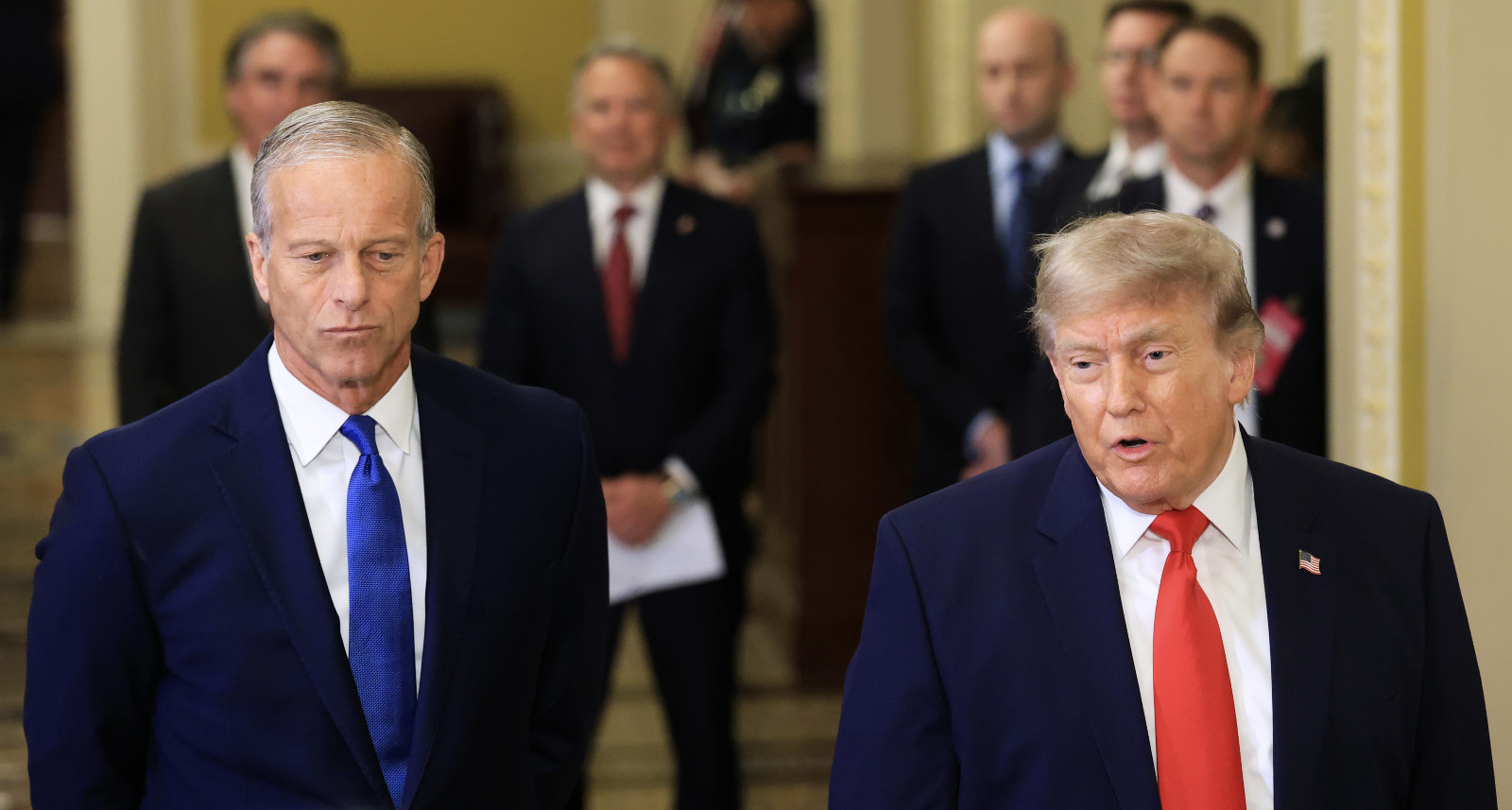

Intraparty tensions surfaced within the upper chamber of Congress as mounting political pressure ahead of the November midterm elections prompted prominent conservative lawmakers to publicly critique Senate leadership, demanding an aggressive legislative push to secure the passage of key administration priorities, most notably the SAVE America Act.
With fewer than ninety days remaining before voters head to the polls, Senator John Kennedy of Louisiana voiced open frustration regarding the legislative pace maintained by Senate Majority Leader John Thune, arguing during a national television broadcast that leadership has exhibited excessive caution in confronting Democratic procedural opposition.
Appearing on national media programs to assess the chamber’s legislative trajectory, Senator Kennedy praised his leadership colleague while simultaneously calling for a more assertive floor strategy.
“Look, I mean no disrespect. I love John Thune. He’s my leader. He’s got a big brain. He’s better looking than me, but I think he’s just being too cautious.”
Senator John Kennedy stated while urging Senate leadership to accelerate the consideration of major legislative packages before the chamber’s autumn adjournment.
Senator Kennedy contended that Republican leadership should immediately bring comprehensive conservative priorities to the Senate floor rather than deferring action while awaiting bipartisan consensus. Among the critical legislative items highlighted by Kennedy were the House budget resolution, expanded defense appropriations, agricultural assistance packages, digital asset market structure reforms, and heightened legislative sanctions targeting foreign adversaries like Russia.
However, the primary focus of Kennedy’s appeal centered on the SAVE America Act, a high-profile electoral integrity measure championed by President Donald Trump that would mandate documentary proof of United States citizenship during federal voter registration and enforce universal voter identification requirements nationwide. While the legislation has repeatedly cleared the House of Representatives, it has encountered staunch Democratic opposition and procedural roadblocks in the Senate, where sixty votes are required to overcome the traditional legislative filibuster against a Republican majority holding 53 seats.
Proponents of the legislation argue that strict proof-of-citizenship mandates are essential to restore public trust in electoral outcomes. The legislative push has drawn heightened urgency following recent declassified intelligence disclosures released by the administration concerning foreign electoral interference during prior election cycles, which conservative lawmakers argue underscore vulnerabilities within state voter registration rolls.
Conservative policy analysts and election integrity advocates have similarly intensified pressure on congressional leadership. Hans Von Spakovsky, an election law expert with the conservative think tank Advancing American Freedom, emphasized the necessity of immediate legislative action.
“The president is absolutely correct that the SAVE Act needs to be passed to implement universal voter ID and proof of citizenship. He is also correct that the only reason an elected official would oppose this is because that official wants to make it easy to cheat and ensure that aliens who register and vote are not caught.”
Election expert Hans Von Spakovsky asserted while supporting the immediate enactment of the federal electoral reforms.
Despite procedural hurdles, Senator Kennedy maintained that Republican leadership must force votes on the measure to establish a clear legislative record as the midterm electoral cycle reaches its decisive final phase.
“In my opinion, for both sides to have credibility in our elections, we need to do two things and only two things. I think we can pass it … but we’re not going to know if we don’t try.”
Senator Kennedy concluded, emphasizing that legislative action remains imperative regardless of partisan procedural resistance in the Senate.