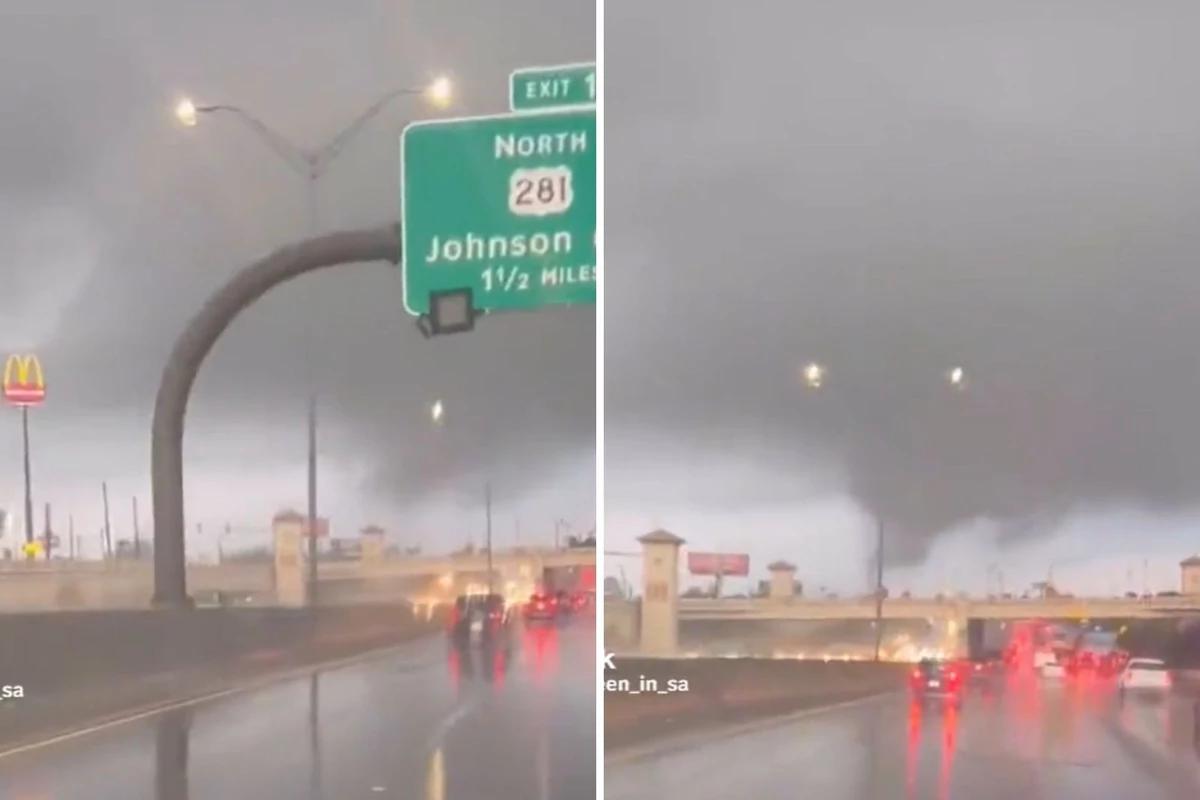
Several eyewitness videos captured what appears to be a tornado crossing the Interstate 10 corridor near FM 1604 on the northwest side of San Antonio, Texas. The videos show the funnel moving across or very near the busy freeway as motorists slowed or stopped while debris was blown through the area.
The National Weather Service later confirmed that an EF1 tornado with estimated peak winds of about 100 mph (160 km/h) touched down around 7:44 a.m. and remained on the ground for approximately 8 minutes. Its path crossed several major roads, including Loop 1604 and Interstate 10, causing damage to nearby apartment buildings, businesses at The Rim shopping center, and scattered debris along the freeway.
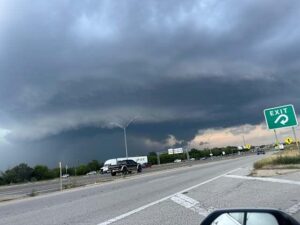
Tornado crosses busy San Antonio freeway! 🌪️ Dramatic eyewitness videos show a tornado moving across the I-10 and FM 1604 area, forcing drivers to slow as debris swirled through the roadway. Officials later confirmed the tornado was rated EF1, with winds near 100 mph, leaving damage to nearby buildings and businesses before dissipating.

Tornado Crosses Busy San Antonio Freeway as Eyewitnesses Capture Dramatic Videos
A powerful tornado swept across one of San Antonio’s busiest highway corridors, startling drivers and residents as it crossed near Interstate 10 (I-10) and FM 1604. Multiple eyewitnesses recorded the dramatic weather event, capturing a large funnel cloud moving across the landscape while vehicles slowed to a crawl and debris swirled through the air. The videos quickly spread across social media, drawing widespread attention as people watched the rare and dangerous scene unfold in real time.
The tornado developed during a period of severe thunderstorms that moved through the San Antonio area, bringing heavy rain, lightning, strong winds, and hail. Weather conditions rapidly deteriorated as dark clouds gathered over the city, prompting meteorologists to issue tornado warnings for parts of Bexar County. Residents were urged to seek shelter immediately while emergency officials monitored the fast-moving storm.
Near the intersection of I-10 and FM 1604 on San Antonio’s northwest side, motorists suddenly found themselves facing dangerous conditions. Several drivers pulled over to the shoulder of the freeway while others cautiously continued moving as the tornado appeared to cross the roadway. Videos taken from inside vehicles showed the funnel stretching from the cloud base toward the ground, accompanied by blowing dust, rain, and flying debris.
Although the tornado crossed near one of the region’s busiest transportation routes, many drivers remained remarkably calm, keeping a safe distance while allowing emergency vehicles to move through the area. Some witnesses described hearing a loud roaring sound commonly associated with tornadoes, while others watched power flashes illuminate the sky as electrical equipment was damaged by the intense winds.
The National Weather Service later surveyed the damage and confirmed that the tornado was an EF1 on the Enhanced Fujita Scale. Meteorologists estimated peak winds reached approximately 100 miles per hour (160 kilometers per hour). The tornado remained on the ground for about eight minutes, carving a path across portions of northwest San Antonio before weakening and dissipating.
Along its path, the tornado caused damage to apartment complexes, commercial buildings, businesses, and trees. Roof sections were torn away from several structures, windows were shattered, fences were destroyed, and numerous signs were knocked down. Vehicles parked outside businesses suffered broken windows and body damage after being struck by flying debris.
The tornado also impacted shopping and business districts near The Rim and surrounding commercial areas. Emergency crews responded quickly to assess structural damage, clear debris from roads, and ensure public safety. Utility companies dispatched workers to restore power after strong winds damaged electrical lines and equipment, leaving thousands of customers temporarily without electricity.
Despite the frightening images, officials reported that early warnings likely helped reduce injuries. Weather alerts were issued before the tornado reached populated areas, giving residents and businesses valuable time to move to safer locations. Emergency management officials credited the combination of National Weather Service warnings, local media coverage, and public awareness for helping people prepare before the tornado arrived.
Meteorologists explained that the tornado formed as unstable atmospheric conditions combined with strong wind shear associated with an active storm system moving across central Texas. Warm, humid air from the Gulf of Mexico collided with cooler air aloft, creating favorable conditions for severe thunderstorms capable of producing rotating supercells and tornadoes.
Texas experiences more tornadoes than any other state in the United States due to its unique geography and climate. While tornadoes can occur at any time of year, the greatest risk generally comes during the spring months, although significant events can also occur during the fall and summer when atmospheric conditions become favorable.
Residents living near the tornado’s path described moments of uncertainty as weather conditions changed rapidly. Some said they first noticed the sky turning an unusual shade of green before heavy rain and powerful winds arrived. Others reported hearing emergency alerts on their phones just minutes before the tornado became visible.
First responders, including firefighters, police officers, and emergency medical personnel, quickly mobilized after reports of damage began coming in. Teams searched affected neighborhoods, checked damaged buildings, and assisted residents whose homes or businesses had been impacted. Public works crews worked throughout the day removing fallen trees, clearing roadways, and repairing damaged infrastructure.
Transportation officials advised motorists to avoid the affected highway corridors while cleanup operations continued. Traffic delays developed around I-10 and FM 1604 as emergency vehicles, utility crews, and maintenance workers responded to multiple locations. Drivers were encouraged to use alternate routes until roads could be safely reopened.
Local schools and businesses monitored the severe weather throughout the day, with some delaying operations or asking employees to shelter indoors until the storms had passed. Community organizations also began coordinating assistance for residents affected by property damage.
Insurance companies reminded homeowners and business owners to document any storm damage with photographs before beginning cleanup. Officials also warned residents to stay away from downed power lines, damaged buildings, and flooded roadways, emphasizing that hazards often remain even after a tornado has moved away.
Weather experts noted that while tornadoes crossing major highways often receive significant public attention because of dramatic videos, the greatest danger comes from flying debris rather than the funnel itself. Even relatively weak tornadoes can generate winds capable of lifting heavy objects, breaking windows, and causing serious injuries.
Emergency management officials encouraged residents to have multiple ways to receive weather warnings, including smartphone alerts, NOAA Weather Radio, television broadcasts, and local emergency notification systems. They also reminded families to develop emergency plans identifying safe shelter locations, especially during severe weather season.
As cleanup efforts continued, many San Antonio residents expressed gratitude that the tornado did not result in more widespread devastation. Community members praised first responders, utility crews, and neighbors who helped one another immediately after the storm passed.
The dramatic eyewitness videos serve as a powerful reminder of how quickly severe weather can develop and how important it is to take tornado warnings seriously. Experts emphasize that if a tornado warning is issued, people should immediately seek shelter in a sturdy building, move to the lowest floor, stay away from windows, and protect themselves until officials announce that the danger has passed.
The San Antonio tornado stands as another example of Texas’ unpredictable weather, demonstrating both the destructive power of nature and the importance of preparedness, timely warnings, and coordinated emergency response. While property damage was significant in some areas, the combination of advance forecasting, public awareness, and rapid emergency action helped minimize the impact of a dangerous storm that unfolded before the eyes of countless motorists and residents.